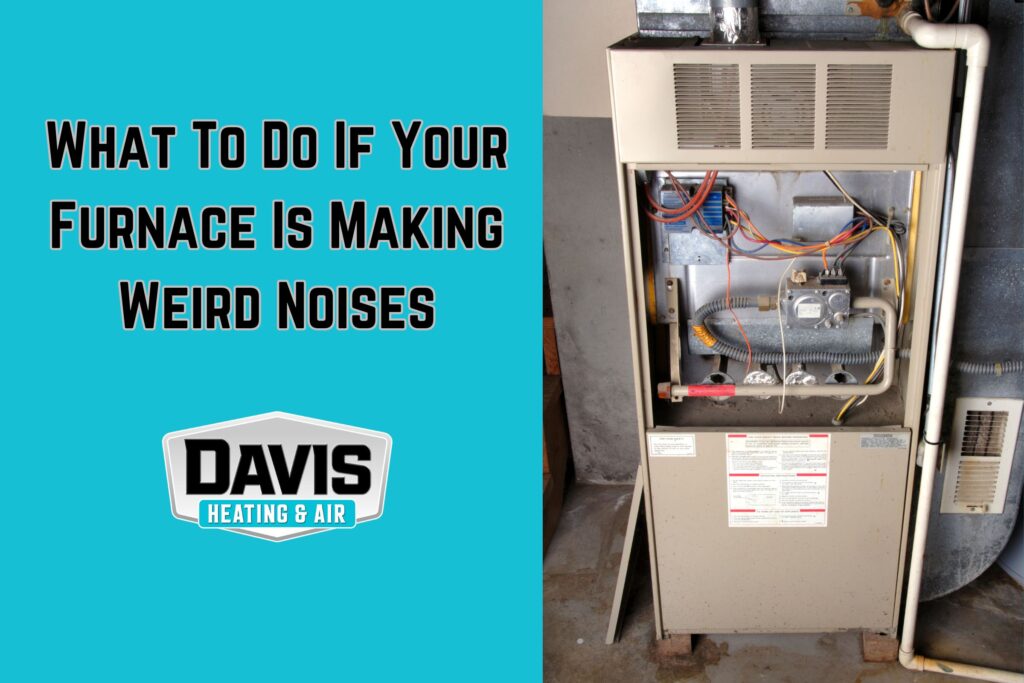
It’s normal for your furnace to make a low hum while running—but loud, sudden, or strange noises? That’s usually a sign that something’s wrong. From banging and squealing to rattling and clicking, each sound tells a story about what’s going on inside your system.
If you’ve been wondering, “Why is my furnace making noise all of a sudden?”, you’re not alone. In this guide, we’ll walk you through common furnace sounds, what they mean, and when to call for help.
Common Problems With Furnaces
Furnaces can make noise for a variety of reasons. While some are minor, others are serious and require prompt attention. Loose parts, aging motors, dirty burners, or ignition problems can all lead to sounds that shouldn’t be ignored.
While every furnace makes a bit of noise during normal operation, unusual or loud sounds are often an early warning sign of common furnace problems. Paying attention to these noises and acting early can prevent more expensive repairs down the line.
When Your Furnace Makes a Humming Noise
A low hum is part of normal furnace operation. But if the noise gets louder or continues after the cycle ends, it could mean there’s a problem with the blower motor, capacitor, or transformer.
In some cases, a furnace making a humming noise may point to electrical issues or failing components. If the hum gets worse over time, consider it a furnace repair sign and schedule an inspection to avoid further damage.
When Your Furnace Makes a Clicking Noise
Clicking sounds when your furnace starts are usually caused by the ignition system, which is normal. But ongoing or repetitive clicking could signal ignition failure, a stuck relay, or even a cracked heat exchanger.
A furnace making a clicking noise that doesn’t stop is a clear reason to schedule furnace repair. Left unchecked, it could keep your system from starting or cause it to shut off unexpectedly.
When Your Furnace Makes a Rattling Noise
A furnace making a rattling noise may simply have a loose panel, screw, or duct connection. But it could also mean something more serious, like a cracked heat exchanger or loose motor mounts.
Because a cracked heat exchanger can lead to carbon monoxide leaks, rattling should be treated seriously. If your furnace is rattling and heating unevenly, contact your HVAC provider right away. If you’re facing an urgent issue, call for emergency repair.
When Your Furnace Makes a Banging Noise
A loud bang or boom usually indicates delayed ignition, which is when unburned gas builds up in the combustion chamber before igniting. This can happen due to dirty burners, low gas pressure, or faulty valves.
A furnace making a banging noise can damage components over time and may create a safety hazard. Shut off your system and call a professional HVAC technician if you hear this sound regularly.
When Your Furnace Makes a Squealing Noise
A high-pitched squeal often comes from worn belts or bearings. It can also signal issues with the blower motor or motor shaft alignment.
If your furnace is making a squealing noise, don’t ignore it. These parts can fail suddenly, leaving you without heat on a cold night.
When Should I Be Concerned With Furnace Noises?
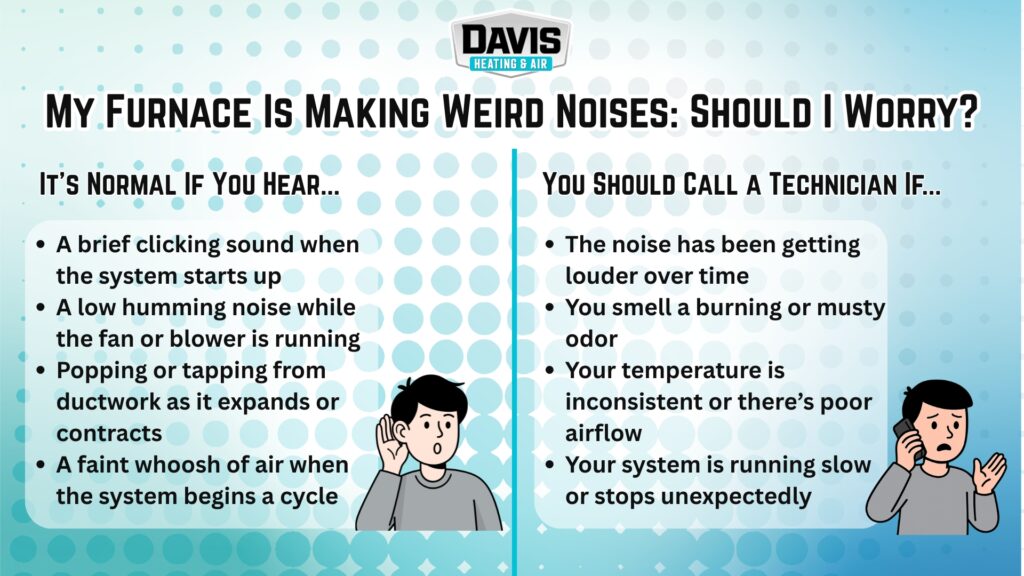
Not all furnace noises are an emergency. Here’s when you should be concerned with loud noises and when you should take action:
- The noise gets louder over time
- You smell something unusual (burning, gas, or mustiness)
- You notice temperature swings or poor airflow
- The system is slow to start or stops unexpectedly
If one or more of these symptoms accompany the noise, it’s time to take a closer look.
When Do I Need To Call a Professional for Furnace Troubleshooting?
DIY furnace troubleshooting might seem tempting, but modern HVAC systems are complex. Misdiagnosing an issue or attempting a repair on your own could void your warranty—or worse, create a safety hazard.
If your system is acting up, contact a professional at Davis Heating & Air for a diagnosis. We offer reliable heating maintenance, emergency repairs, and expert guidance on whether your system needs service or if a full heating replacement makes more sense.
Trust Davis Heating & Air for Furnace Problems
We’ve helped homeowners across South Jersey, from Cherry Hill to Burlington, resolve their furnace issues quickly and affordably. Whether your system needs a minor fix or a full upgrade, we’ll walk you through your options with honesty and care.
Need ongoing support? Ask about our Davis Comfort Elite Plan, which includes priority scheduling, regular tune-ups, and exclusive discounts to keep your HVAC system running smoothly year-round. Contact us today to learn more or to schedule an appointment.
Frequently Asked Questions About Furnace Noises
Why is my furnace making noise all of a sudden?
Sudden noise usually means something has changed, like a loose part, dirty burner, or failing motor. Unusual sounds shouldn’t be ignored, whether they happen when the furnace turns on or while it’s running.
How long should I wait before calling a technician about furnace noise?
If the noise is loud, persistent, or accompanied by other issues like uneven heating or strange odors, you should call right away. The longer you wait, the more damage may occur.
Can furnace noises be seasonal or weather-related?
Some minor noises, such as duct popping, can occur when temperatures fluctuate. But mechanical or electrical noises like banging, clicking, or squealing are signs of common furnace problems that need professional attention.
Can regular maintenance prevent furnace noises?
Yes, routine heating maintenance can catch early signs of wear and tear, clean dirty components, and tighten loose parts, which helps prevent many noises before they start.
Is it ever safe to ignore furnace noises?
If the sound is unusual or new, it’s always best to investigate. Ignoring early warning signs can lead to bigger problems, higher energy bills, or complete system failure.