
Was Your Power Bill Higher This Month?
You open your utility bill and immediately do a double take.
The amount is significantly higher than last month, and nothing about your daily routine seems different. You haven’t added new appliances. You haven’t changed your thermostat settings. Your family’s schedule is mostly the same.
So why did your energy bill suddenly jump?
For many homeowners throughout Cherry Hill, NJ and the surrounding South Jersey communities, rising utility costs are one of the first signs that something may be wrong with their HVAC system.
Heating and cooling account for a significant portion of the average home’s energy usage. When your HVAC system becomes less efficient, your monthly utility bill often notices before you do.
At Davis Heating & Air, we regularly help homeowners identify hidden HVAC issues that are causing unnecessary energy consumption. Here are some of the most common reasons your energy bills may have suddenly spiked and what you can do about them.
Call (856) 429-7979
Start By Looking At The Weather
Before assuming something is wrong with your HVAC system, consider recent weather conditions.
Heat Waves Can Dramatically Increase Energy Usage
During a South Jersey heat wave, your air conditioner may run much longer than normal.
Even a properly functioning system can experience:
- Longer cooling cycles
- Increased electricity usage
- Higher utility bills
Air conditioners are designed to maintain indoor comfort, not instantly overcome extreme outdoor temperatures.
If temperatures have recently been in the 90s with high humidity, some increase in energy consumption may be expected.
Humidity Plays A Major Role
Many homeowners focus only on temperature.
However, humidity can have a major impact on comfort and energy usage.
When humidity levels rise:
- Air feels warmer
- Cooling systems work harder
- Cooling cycles become longer
South Jersey summers are known for their humidity, which can significantly increase HVAC demand.
Dirty Air Filters Force Your System To Work Harder
One of the simplest explanations for rising energy bills is also one of the most common.
A dirty air filter restricts airflow throughout your HVAC system.
What Happens When Airflow Is Restricted?
The system must work harder to move air through your home.
This often leads to:
- Longer run times
- Reduced efficiency
- Higher energy consumption
- Increased wear and tear
Many homeowners are surprised by how much impact a clogged filter can have on operating costs.
Replacing the filter is one of the easiest and most affordable ways to improve efficiency.
Your HVAC System May Be Running Longer Than Necessary
Sometimes homeowners don’t notice their HVAC system is operating differently until they see the utility bill.
Warning Signs Of Longer Run Times
Watch for:
- Air conditioning running most of the day
- The system rarely shutting off
- Constant fan operation
- Rooms taking longer to cool
Longer run times may indicate:
- Airflow issues
- Refrigerant problems
- Dirty coils
- Aging equipment
The longer the system runs, the more energy it consumes.
Your Outdoor Unit May Be Struggling
Your outdoor condenser is responsible for releasing heat removed from your home.
If airflow around the unit becomes restricted, efficiency suffers.
Common Outdoor Unit Problems
Many Cherry Hill homeowners unknowingly allow:
- Shrubs
- Grass
- Leaves
- Landscaping materials
to crowd the condenser.
Restricted airflow forces the system to work harder and consume more energy.
Ideally, outdoor units should have at least 2-3 feet of clearance around them.
Refrigerant Problems Can Increase Energy Costs
Low refrigerant levels often cause a noticeable increase in utility bills.
Why Low Refrigerant Is Expensive
When refrigerant levels drop:
- Cooling efficiency decreases
- Run times increase
- Energy usage rises
- Comfort declines
Contrary to popular belief, refrigerant does not get “used up.”
If levels are low, there is usually a leak that requires professional attention.
Dirty HVAC Coils Reduce Efficiency
Both indoor and outdoor coils play important roles in heat transfer.
When dirt accumulates on coil surfaces, heat transfer becomes less effective.
The Result
The system must:
- Run longer
- Consume more electricity
- Work harder to maintain comfort
Routine maintenance helps keep coils clean and operating efficiently.
Your Thermostat Could Be Working Against You
Sometimes rising energy bills have nothing to do with HVAC equipment failure.
The thermostat itself may be contributing.
Common Thermostat Issues
Problems may include:
- Incorrect programming
- Faulty sensors
- Calibration issues
- Poor placement
For example, a thermostat exposed to direct sunlight may think the house is warmer than it actually is.
The result is unnecessary cooling and increased energy consumption.
Read More: Your Thermostat May Be Causing The Problem
Ductwork Problems Waste Conditioned Air
Your HVAC system may be producing enough heating or cooling, but the conditioned air may not be reaching the intended rooms.
Leaky Ducts Create Hidden Energy Loss
Damaged ductwork can allow conditioned air to escape into:
- Attics
- Crawl spaces
- Wall cavities
Instead of cooling your living space, the system ends up cooling areas you never use.
This can significantly increase operating costs.
Aging HVAC Equipment Becomes Less Efficient
Even well-maintained HVAC systems lose efficiency as they age.
Signs Your System May Be Aging
Older equipment often:
- Runs longer
- Cycles less efficiently
- Requires more repairs
- Uses more energy
This doesn’t automatically mean replacement is necessary.
At Davis Heating & Air, we believe in fixing problems first whenever possible. However, older systems may benefit from professional evaluation if energy costs continue rising.
Small HVAC Problems Often Show Up On Utility Bills First
Many HVAC issues begin subtly.
You may not immediately notice:
- Reduced efficiency
- Longer run times
- Minor airflow restrictions
Your utility bill, however, notices immediately.
That’s why sudden increases in energy costs often serve as an early warning sign that something deserves attention.
How To Lower Your Energy Bills
Several simple steps can improve HVAC efficiency.
1. Replace Filters Regularly
Clean filters support proper airflow and efficient operation.
2. Schedule HVAC Maintenance
Professional tune-ups help identify:
- Dirty coils
- Refrigerant issues
- Electrical problems
- Airflow restrictions
…before they become larger problems.
4. Keep Outdoor Units Clear
Maintain adequate clearance around your condenser.
4. Address Small Problems Early
Prompt repairs are often less expensive than allowing issues to worsen.
Cherry Hill HVAC Service From Davis Heating & Air
If your energy bills have suddenly increased and you’re not sure why, Davis Heating & Air can help.
We proudly provide HVAC inspections, maintenance, repairs, and diagnostics throughout Cherry Hill, NJ and the surrounding South Jersey communities.
Our experienced team can identify hidden efficiency problems, improve system performance, and help restore comfort without unnecessary recommendations.
We Fix It First, which means we always explore repair and maintenance solutions before recommending replacement whenever possible.
Contact Davis Heating & Air today and let us help you get your HVAC system — and your energy bills — back under control.
Call (856) 429-7979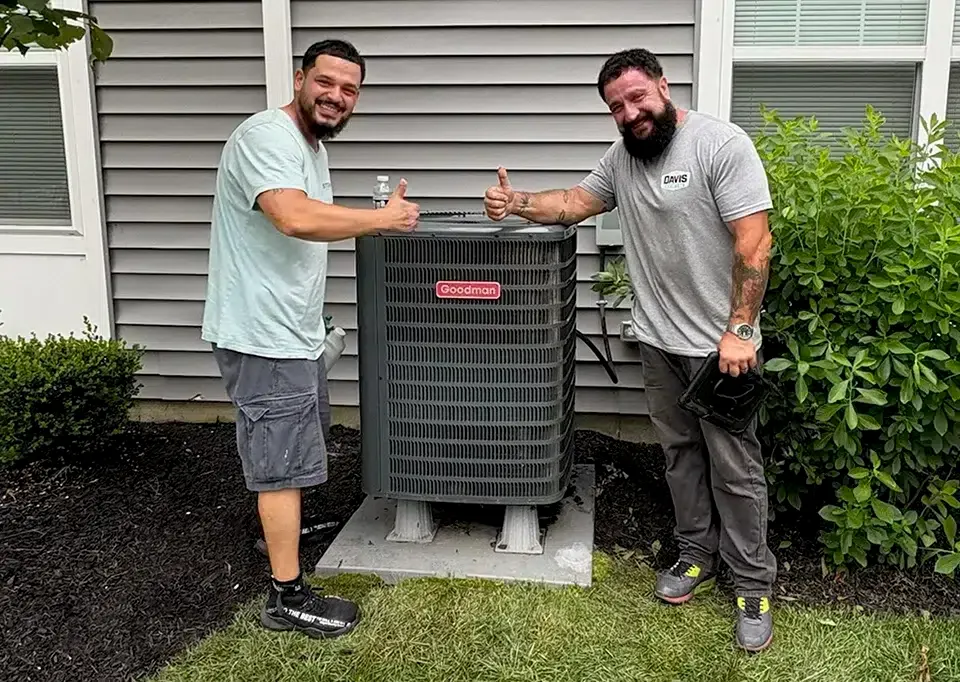
 All Service Areas