
4.9 Stars | 1,300+ Google Reviews
Pool Heater Repair Cherry Hill, NJ
Pool Heater Repair in Cherry Hill, NJ
When your pool heater stops working, the water can quickly become too cold for comfortable swimming. Even when the system still runs, problems such as weak heating, unusual noises, ignition failures, or unexpected shutdowns may indicate that professional service is needed.
Davis Heating & Air provides dependable pool heater repair in Cherry Hill, NJ, and the surrounding South Jersey area. Our team carefully evaluates the equipment, identifies the cause of the problem, and explains the available repair options before work begins.
As a fix-it-first company, Davis Heating & Air will do everything we reasonably can to repair your existing equipment before recommending replacement. Our goal is to provide the most practical solution for your pool, budget, and long-term comfort. We proudly serve Barclay Farm, Wexford Leas, Woodcrest, and nearby Cherry Hill communities with dependable heating support.
Cherry Hill Pool Heater Repair Services & More
Gas Pool Heater Repair
Gas pool heaters use natural gas or propane to heat water as it moves through the system. They can provide rapid heating but rely on proper combustion, gas pressure, airflow, ventilation, water flow, and safety controls.
Common gas pool heater problems include:
- Failure to ignite
- Pilot-light or electronic ignition trouble
- Burner contamination
- Flame-sensor failure
- Gas-valve problems
- Soot or combustion residue
- Exhaust or ventilation issues
- Heat-exchanger damage
- High-limit switch activation
Gas-related pool heater repairs should always be handled by a trained professional. Improper service can create fire, combustion, or carbon monoxide hazards.
Electric Pool Heat Pump Repair
A pool heat pump absorbs heat from the surrounding air and transfers it into the pool water. Its operation depends on adequate airflow, proper water circulation, electrical components, and a functioning refrigeration circuit.
Common heat-pump issues include:
- The fan does not run
- The compressor will not start
- The unit runs without producing enough heat
- Ice develops on the coil
- The system shuts down unexpectedly
- A capacitor or contactor fails
- Airflow becomes restricted
- Sensors provide incorrect readings
- The refrigerant circuit develops a fault
Some performance concerns may be related to outdoor conditions rather than equipment failure. Our team can determine whether the system needs repair or is operating within its expected range.
How Do You Know If You Need Pool Heater Repair in Cherry Hill, NJ?
Pool heater problems are not always as obvious as a complete system failure. Some issues develop gradually and may first appear as longer heating cycles, higher energy use, or inconsistent water temperatures.
Contact Davis Heating & Air when you notice any of the following warning signs.
The Pool Water Is Not Getting Warm
If the heater is running but the water remains cold, there may be a problem with the thermostat, flow sensor, bypass valve, heat exchanger, burner, compressor, refrigerant circuit, or control system.
The correct diagnosis depends on whether you have a gas pool heater or an electric pool heat pump.
The Pool Heater Will Not Turn On
A pool heater may fail to start because of:
- Insufficient water flow
- Electrical problems
- Ignition failure
- Gas-supply issues
- A faulty pressure or flow switch
- A tripped safety control
- Thermostat problems
- Control-board failure
- Improper system settings
Because many heaters are designed to shut down when unsafe conditions are detected, repeatedly resetting the system without addressing the cause is not recommended.
The Pool Heater Starts and Stops Repeatedly
Short cycling occurs when the heater turns on and off more frequently than normal. This may be caused by restricted water flow, dirty filters, incorrect valve positions, overheating, malfunctioning sensors, control problems, or improper equipment sizing.
Frequent cycling can reduce comfort, increase wear, and make it difficult to maintain a steady water temperature.
The Pool Water Temperature Is Inconsistent
If the pool alternates between warm and cool or never reaches the selected temperature, the heater may have a faulty thermostat, temperature sensor, control board, flow problem, or heat-transfer issue.
Temperature inconsistencies may also occur when the heater is undersized or when excessive heat is being lost through evaporation.
The Pool Heater Is Making Unusual Noises
Banging, whistling, grinding, clicking, rattling, or high-pitched sounds should not be ignored.
Unusual pool heater noises may be related to:
- Scale buildup
- Restricted water flow
- Overheating
- Loose components
- Burner problems
- Fan or motor issues
- Compressor trouble
- Debris inside the equipment
Turning the heater off and scheduling service may help prevent additional damage.
You Smell Gas Near the Pool Equipment
A gas odor near the heater requires immediate attention. Turn off the equipment, avoid operating electrical switches or creating flames nearby, leave the immediate area, and contact the gas utility or emergency services when appropriate.
Do not attempt to restart a gas pool heater until it has been evaluated by a qualified professional.
The Heater Displays an Error Code
Modern pool heaters monitor water flow, temperature, pressure, ignition, combustion, exhaust conditions, and other operating factors. An error code may help identify which safety circuit or component is reporting a problem, but the code does not always reveal the underlying cause.
Our technicians can interpret the code, test the related components, and determine what repair is actually needed.
Your Energy Costs Have Increased
A pool heater that runs longer than usual or struggles to transfer heat efficiently may use more energy while providing less comfort.
The cause may be dirty components, scaling, poor water flow, damaged controls, combustion problems, refrigerant issues, or normal equipment deterioration.
Our Cherry Hill Pool Heater Repair Process
Davis Heating & Air uses a thorough service process to identify the actual problem and help homeowners avoid unnecessary repairs.
- Discuss the Symptoms: We begin by asking what the heater is doing, when the problem started, whether any error codes have appeared, and whether recent changes were made to the pool equipment or controls.
- Inspect the Pool System: The heater depends on the pool pump, filter, valves, plumbing, electrical supply, and water flow. We review these related components to identify conditions that may be affecting heater performance.
- Test the Heater: Depending on the equipment, testing may include the thermostat, controls, switches, sensors, wiring, ignition system, burner, fan, compressor, safety devices, and temperature response.
- Identify the Cause: Our goal is to determine why the heater failed rather than simply replacing the first component associated with the symptom.
- Explain the Repair Options: Once we identify the problem, we explain what we found, what repair is recommended, and whether there are any concerns about the system’s overall condition.
- Complete the Approved Repair: After receiving approval, we complete the repair using appropriate parts and service procedures.
- Test System Operation: We restart the pool heater, monitor its operation, verify water flow and temperature response, and confirm that the system is functioning as expected.
Common Pool Heater Problems We Repair
Davis Heating & Air services many types of pool heating problems. The exact repair will depend on the heater design, equipment condition, and results of the diagnostic process.
Common issues include:
- Failed ignition systems
- Faulty thermostats
- Defective temperature sensors
- Damaged pressure or flow switches
- Control-board failures
- Loose or damaged wiring
- Clogged burners
- Pilot-light problems
- Gas-valve issues
- Flame-sensor failures
- Blower or fan problems
- Heat-exchanger scaling
- Restricted water flow
- Leaking connections
- Corroded components
- Compressor or capacitor problems
- Heat-pump airflow restrictions
- Refrigerant-system issues
- Damaged displays or user controls
- Repeated safety shutdowns
Because several problems can produce similar symptoms, accurate testing is essential before parts are replaced.
Frequently Asked Questions About Pool Heater Repair
Possible causes include low water flow, thermostat problems, sensor failure, dirty components, burner or ignition issues, heat-exchanger scaling, compressor trouble, or a heater that is not properly sized for the pool.
The heater may be responding to a safety condition such as low flow, overheating, improper pressure, ignition failure, blocked airflow, or a faulty sensor. Professional testing is needed to determine what is triggering the shutdown.
Yes. A clogged filter can reduce water flow through the heater. Many systems will shut down or refuse to start when the flow rate is too low.
Banging or knocking may indicate restricted flow, scale buildup, overheating water, or movement within the plumbing or heat exchanger. Turn off the heater and schedule an inspection before continuing to use it.
Some leaks originate from plumbing connections, seals, drain plugs, or replaceable components. A leaking heat exchanger may be more serious. The heater must be inspected to determine the location and extent of the leak.
That depends on the heater’s age, condition, efficiency, repair history, availability of parts, and cost of the current repair. Davis Heating & Air can explain whether repair or replacement provides the better value.
See What Your Neighbors Are Saying

Anthony and Devin were on time and did a very thorough job cleaning all my ducts and dryer vent. They were very personable, considerate, hard working, and knowledgable. Highly recommend and will be using them in the future when the time comes. Thanks guys!

Had Devin out for the second time and had another great experience. He is very friendly, personable and took the time to answer all of my questions. He pointed out a couple of additional services that might be worth considering and explained why they could be helpful. I never

Anthony & Devin were awesome! They came out to clean my air ducts and vents. They were professional from start to finish…and they were friendly, personable and had great energy! They explained everything (sometimes re-explained lol), and pointed out a few important things. They

Our tech, Kyle was very professional, personalable, and knowledgeable. He maid sure that he explained every aspect of what was needed now and what we may be looking at down the road. Best service ever.

I’ve been using Davis Heating & Air for over 15 years, and they’ve consistently provided excellent service. The reason I’m writing this review now is that I recently referred one of my friends to them. He was extremely happy with their work, and they even gave him a nice

The team from Davis were very professional, and helpful. I recommend them for your heating and cooling system service or repair.

Devin and Anthony did an amazing job cleaning my vents! They were incredibly friendly and professional from start to finish. They made sure I was comfortable with every step of the process—they kept me informed which I really appreciated. Everything was done thoroughly and with

Im so happy I chose this company. The gentlemen that came to do the work were not only hard and diligent workers, but respect and kind. Thank you Anthony and Dinovan for such great service 👏

Been using Davis for a few years now and they are my go to for any HVAC needs. They helped me 3 years ago when I had an issue with my heat pump that 2 other places couldn’t figure out. They were able to locate the issue within 20 minutes and it was an easy fix that they gave me

We had no heat. Called Davis and within an hour our tech, Kyle Rinier, was here. He was very professional and friendly. Diagnosed the issue quickly and provided an estimate. This was on a weekend and the parts needed for our repair were not commonly available but early Monday

Kyle,our Technician showed within one hour of our phone call. He was well dressed clean uniform professional. He immediately covered covered his work shoes with clean covers. He was polite and knowledgeable, my wife and I felt at ease after being without heat after such a large

Davis was quick to respond, kept me updated about the status of my repair appointment, and arrived on time with clear notifications. I really appreciated Kyle's thoroughness and the time he took to explain the issue and my options. Service was professional and high quality.

Ethan N. arrive promptly to do an electrical inspection. He was very thourough and detailed oriented. Ethan had a professional, educated, managerial demeanor about him. Ethan was very patient answering my questions and very knowledgeable on a number of issues. He patiently took

Yesterday, our heat went out and we thought that our Nest thermostat died after talking to the Nest Customer Service. They suggested that we purchase a new thermostat since it would take 3-5 days to get us a replacement. I picked up a cheap thermostat at Home Depot and connected

Ian (not sure if I spelled it correctly) and Kyle were fantastic Throughout the entire process of my emergency service call. Kyle is professional, knowledgeable, kind, and listens. I am now a Davis customer for life! Thank you!

Excellent service. Daniel Randolph was very knowledgeable and professional. I am very satisfied. I will definitely continue to use Davis Heating & Air for any future maintenance and repair.

Justin and Devon were great. They kept me informed of the progress. They were respectful. They cleaned everything up. They double checked the operation of our boiler. I would definitely recommend them to my friends and family.

Thank you to the gentlemen from Davis that did a stupendous installation on our new heating and air system. They were professional in their daily tasks. You could see the brotherhood they had as coworkers. They were mindful of our hotdog (dachshund) and would greet him with a

Thanks to the guys from Davis for the excellent heater repairs. Felix and Ian answered our calls and worked with us to schedule the techs. Phashon did our yearly maintenance and did a really thorough inspection. Dan and Justin(?) repaired our heaters and Dan explained everything

Davis came to my house to do winter maintenance, and they did an excellent job! Everyone that I spoke to was professional and very knowledgeable! Dan was the tech that came to my house, and he was professional, courteous, knowledgeable, and on time! Thank you Davis , you are a

A great experience from start to finish. Harry, their estimator, was a great listener and understood completely what we wanted. Rodney, Kenny and Anthony, the installers were prompt, courteous, hardworking and great HVAC techs. Would not hesitate to recommend Davis to anyone.

I couldn’t be more impressed with Davis Heating & Air! From the moment I called, their team went above and beyond fast response, crystal clear explanations, no pressure, and top-notch workmanship. They treated my home like it was their own and made sure everything was perfect

Thanks to Bobby for catching our hot water heater leaking and catching a potential disaster while servicing our heater before we turn it on for the season! Bonus points for Davis Plumbing being out same day and installed a new water heater in less than 24 hours. Thank you! Great

Jason our technician arrived after providing a phone call letting us know he was on the way. He came prepared with all equipment needed. Diagnosed the issue very quickly. He was able to find the part needed and scheduled us with an appointment immediately. Id definitely
Why Choose Davis Heating & Air for Pool Heater Repair?
Pool heater repair requires an understanding of heating equipment, electrical controls, water circulation, safety systems, and the specific design of the installed unit.
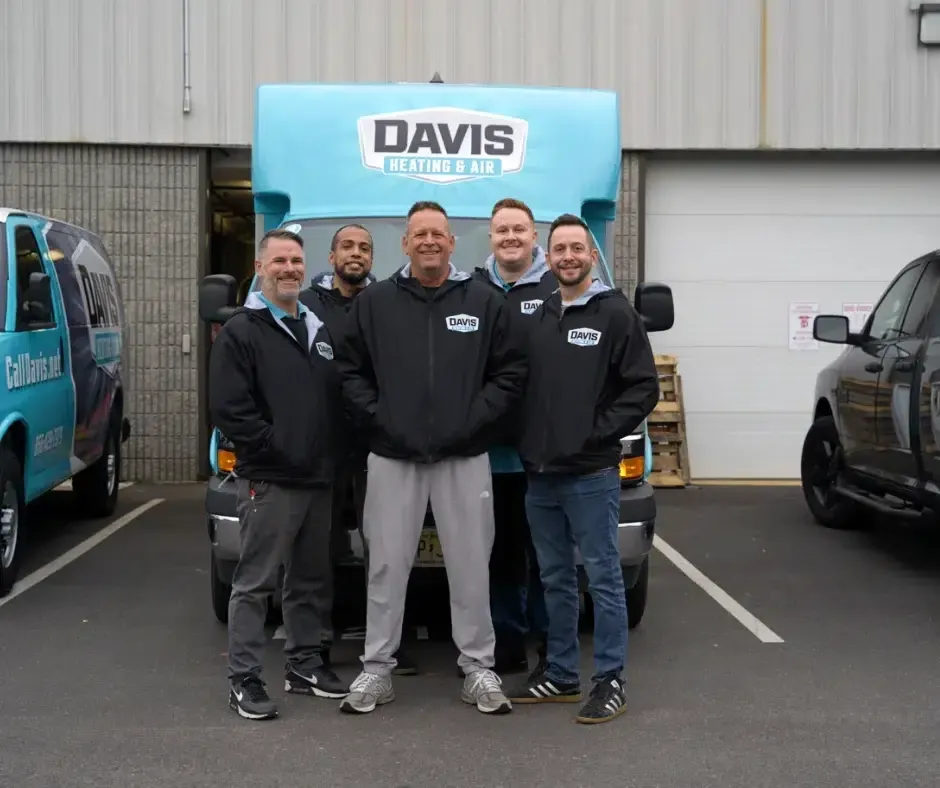
Cherry Hill homeowners choose Davis Heating & Air because we offer:
A Fix-It-First Approach
We do not begin with the assumption that you need new equipment. We carefully diagnose the existing heater and look for a reliable repair before discussing replacement.
Thorough Diagnostics
Pool heater symptoms can be misleading. We evaluate the complete system to identify the underlying cause and reduce unnecessary part replacement.
Straightforward Explanations
We explain what is wrong, what may have caused the failure, and what is involved in the recommended repair.
Service for Multiple Heater Types
Our team can evaluate common gas pool heaters and electric pool heat pumps, including their controls, safety devices, water-flow requirements, and heating components.
Local South Jersey Service
We serve homeowners throughout Cherry Hill and nearby South Jersey communities. Our team understands how local seasonal conditions affect pool heating performance and usage.
Respectful Service
We work carefully around your outdoor living area and pool equipment. When the service is complete, we clean the work area and review the results with you.
How Can You Help Prevent Pool Heater Problems?
Not every repair can be avoided, but proper pool care may reduce strain on the heater and protect important components.
Maintain Proper Water Chemistry
Unbalanced water chemistry can contribute to corrosion, scaling, and heat-exchanger damage. Follow the pool equipment manufacturer’s water-quality requirements and test the water regularly.
Keep the Filter Clean
A dirty pool filter may restrict water flow. Because many heaters require a minimum flow rate, restricted circulation can cause poor heating or safety shutdowns.
Maintain Correct Valve Positions
Incorrectly positioned valves can reduce flow through the heater or prevent heated water from circulating properly.
Keep the Equipment Area Clear
Leaves, grass, dirt, and stored items can restrict airflow around a heat pump or interfere with the safe operation of gas equipment.
Use a Pool Cover
A cover helps limit evaporation and retain heat, reducing the amount of time the heater must run to maintain the selected temperature.
Schedule Service When Problems Begin
Continuing to operate a heater that is overheating, short cycling, making unusual noises, or repeatedly displaying errors may result in additional damage.
Family-Owned, Serving All of South Jersey
Davis Heating & Air is a trusted HVAC contractor offering residential and commercial HVAC services to South Jersey areas.
 All Service Areas